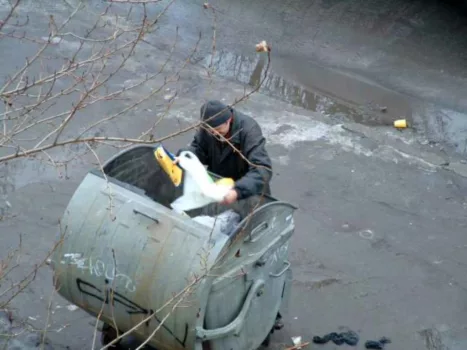
Did you know that it is perfectly legal for people to look through your garbage?
It was ruled in California vs Greenwood, in January 1988. The court of appeals stated:
The Fourth Amendment does not prohibit the warrantless search and seizure of garbage left for collection outside the curtilage of a home.
For this reason, and the fact that criminals will search your garbage for personal information in order to steal from you, you need to destroy documents before throwing them away.
Who Should Shred?
On June 1, 2005 a law went into effect that requires anyone with one or more employees to shred personal records before throwing them away.
The fact is, everyone should shred personal documents in order to prevent identity theft.
What Should You Shred?
You should shred anything that has personal information on it — including items with:
- your signature on them
- account numbers
- your social security number
- medical information
- legal information
Here is a long list of everything that you should shred.
Things You Should Not Shred
There are some things that you will not want to shred, but instead keep.
Some of the more important items you should keep for life are:
- Birth certificates
- Marriage licenses
- Divorce papers
- Death certificates
- Military records
- Social security cards
- Copies of wills
Here is a long list of things to keep, and for how long. (Tip: It’s best to keep these items in a safe deposit box.)
What it comes down to is this: If you don’t already have one, there’s no time like the present to buy a paper shredder.
How To Choose A Paper Shredder
There are 2 types of paper shredders you can choose from:
- Strip cut shredders – these cut paper into long spaghetti-like pieces. It is best to purchase strip cut shredders that cut as small as possible, preferably 1/8 inch.
- Cross cut shredders – these will cut your paper into strips and crosswise, turning the paper into confetti. These smaller pieces of shredded paper will be very difficult to reassemble, making your information safer.
Cross cut shredders are more expensive and require more maintenance than strip cut shredders.
You can get a paper shredder with a wastebasket attached or get a one that sits on top of any wastebasket. (The latter will save you a bit of money.)
Be sure to check the labeling on paper shredders to find the right one for your shredding needs.
For example, you can buy one that shreds 2 to 8 sheets at one time — which is fine if you shred papers infrequently. A commercial-grade shredder will allow you to shred many papers at once on a daily basis. (The label will also tell you whether a particular paper shredder can handle staples, credit cards and CDs.)
Here’s what to look for when buying a paper shredder.
One final thing you should know is that virtually any document can be put back together with enough time and patience. Of course, if you use your shredded paper for cat litter like I do, no one will be willing to try.