Tax Freedom Day: When It Is And How It Works

tax-freedom-dayTax Freedom Day. Sounds like you should not be paying taxes, doesn’t it?

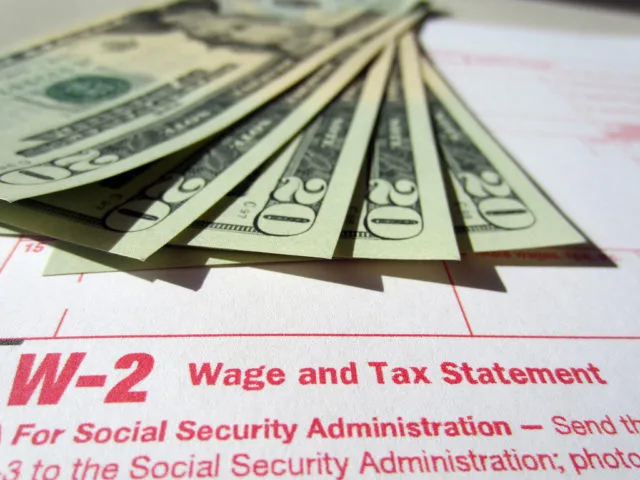
On the contrary, Tax Freedom Day represents how many days the average American needs to work in order to pay their taxes.

Here are 2 examples:

In 2007, Tax Freedom Day fell on April 30, which means Americans on average worked for 120 days in order to pay their taxes.

In 2008, Tax Freedom Day was calculated as April 23, which means that it took Americans 113 days of work to pay their tax obligations. Tax Freedom Day is a useful indicator for gauging the impact of taxes each year. The calculation includes all taxes incurred, including income tax, federal tax, state tax, medicare and excise taxes. Examination of the trends related to Tax Freedom Day illustrates how changes in tax law, government monetary policy, and even World War I and II have affected when Tax Freedom Day will fall. Source
 

Read more

U.S. Savings Bonds

Savings bonds are a great way to invest income conservatively. Not only is the bond guaranteed by the United States government, but it also pays interest based on current market rates.

While the interest on these bonds is taxable at the federal level when redeemed, there is one way to avoid it.

Read more

How To Create An Emergency Fund Or Safety Net Savings Account

Do you have an Emergency Fund (or a Safety Net Savings Account) for that rainy day when your car breaks down or you come home and find that your heating and cooling system is out?

If you don’t, you should!

According to 20 Something Finance, insurance may cover many of these scenarios for you, but there is always a chance that it won’t cover fully what you will need.

These are a few examples they provide:

  • lost job or layoff
  • began a new job that required you to expense a geographic move
  • auto accident, auto retirement, or major repair
  • major home expense such as a broken water line, tree falling on your roof, fire, natural disaster effects, etc.
  • pet health care
  • unexpected taxes owed to IRS
  • death in family that required you to help pay for funeral and other expenses
  • unexpected medical expenses not fully covered by insurance

In my opinion, the number one reason people do not achieve their financial goals is debt.

If you do not have an Emergency Fund, you will have to go into debt to finance the next curve ball that life throws your way.

So how much money should you put aside in your Emergency Fund?

Read more

How To File A Tax Extension

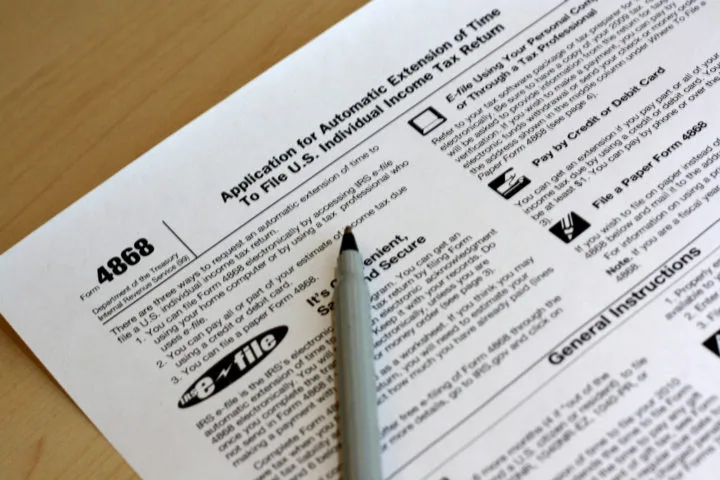
With the tax deadline tomorrow, you may be stressing out trying to get your tax return filled out at the last minute.

Or you may be begging a CPA to find some time to complete your return.

But either way, there is another option. You can always file a tax return extension.

file-a-tax-extension


Read more

Home Prices – What’s Happening?

Think the value of your home can’t decrease? Think again!

According to the National Association of Realtors, the average price of homes will fall nationally by approx 0.7%. This is significant because it would be the first national decline in home prices in over 38 years.

As homeowners, there are two different ways we can look at this anticipated decline.

First, the value of the home where you presently live may decrease in value. Second, there may be buying opportunities if real estate values do decline.

Read more

Breast Reconstruction, Teeth Whitening, Vision Correctiton Surgery – Tax Deductible Or Not?

There are 3 types of special medical expenses that I thought would be interesting to look into:

  • vision correction surgery
  • breast reconstruction; and
  • teeth whitening

These are surgeries or procedures that most of the time are considered cosmetic and therefore you’d think that they could not be deducted on a tax return.

The IRS typically only allows a deduction for these types of surgeries if it is to fix a deformity, due to a disease, or because of an accident. If an elective medical expense falls into one of those categories, it (along with all other allowable medical expenses) still have to exceed 7.5% of your adjusted gross income to be included as a deduction on your tax return.

So, what do you think… deductible or not??

Read more

Frugal Food Tip: How To Save $300 A Month By Brown Bagging It For Lunch

We all have to eat lunch.

The question is… What do we eat? And where do we eat it?

On average, I spend $8 for lunch if I eat out. If I brown bag it and take my lunch to work, it costs about $1.10. That’s a savings of $6.90 per day.

If I factor in my spouse, we’re actually saving $13.80 per day or approximately $300 per month simply by bringing our lunch rather than eating out!

brown-bag-lunch

Let’s look at how to calculate your personalized brown bag savings using an easy online calculation tool.


Read more

SEP IRA – A Way To Save Money On Your Taxes If You Are Self-Employed

A Simplified Employee Pension (also known as a SEP IRA) may help you save money on your taxes if you are self-employed.

For many small business owners and self-employed persons, taxes are a primary concern. Contributions to a SEP IRA lower your taxable income to the IRS. They can be made up until you file your taxes (so in theory up until April 15th).

Your money will grow tax differed while it is in the SEP IRA and will be taxed when you withdraw the dollars in retirement.

Read more

Income The IRS Can’t Tax

Think you need to include ALL income on your tax return? Think again!

There are several sources of income the IRS tax code does not allow to be taxed.

Below I’ve listed a few types of income that you should not include on your tax return.

irs-income


Read more

Top 5 Tax Deductions That Most People Miss

Even through we’re in the age of electronic tax preparation, there are still a lot of tax deductions that go under the radar.

I’ve compiled a list of what I consider the top 5 tax deductions that most people miss.

tax-deductible-car-donation


Read more

Fixing Health Care And Health Insurance …Here’s An Idea!

Medical costs, along with medical insurance premiums, are out of control in this country! Why is this, and who’s to blame?

Why is it that when I have a 10 o’clock appointment with my doctor, I end up sitting in the waiting room for 30 minutes. Next, I wait on the butcher paper in a smaller waiting room on an uncomfortable table for another 15 minutes. Finally, the opportunity comes to see the doctor who barely has five minutes to spend before rushing out the door.

My bill ends up only being $25 dollars because that’s what the copay is on my health insurance. I go to the pharmacy to get my prescription filled and it costs me $10 for a pharmacy copay

This is exactly what is wrong with our health system – in this and many other countries. With any other transaction, if the professional was 45 minutes late for our appointment I would have left never to return again. However, with our medical system there seems to be no penalty for failing to provide top level service.

Let’s look at the problem a little further and how we can fix it…

Read more